The crew is
home
April 11, 2026, 00:07 UTC. After 10 days in space and 2.1 million kilometers traveled, the Orion capsule splashed down in the Pacific Ocean. Wiseman, Glover, Koch, and Hansen — all four safe and well. For the first time in 54 years, humans flew to the Moon and returned to Earth.
Perfect
bullseye
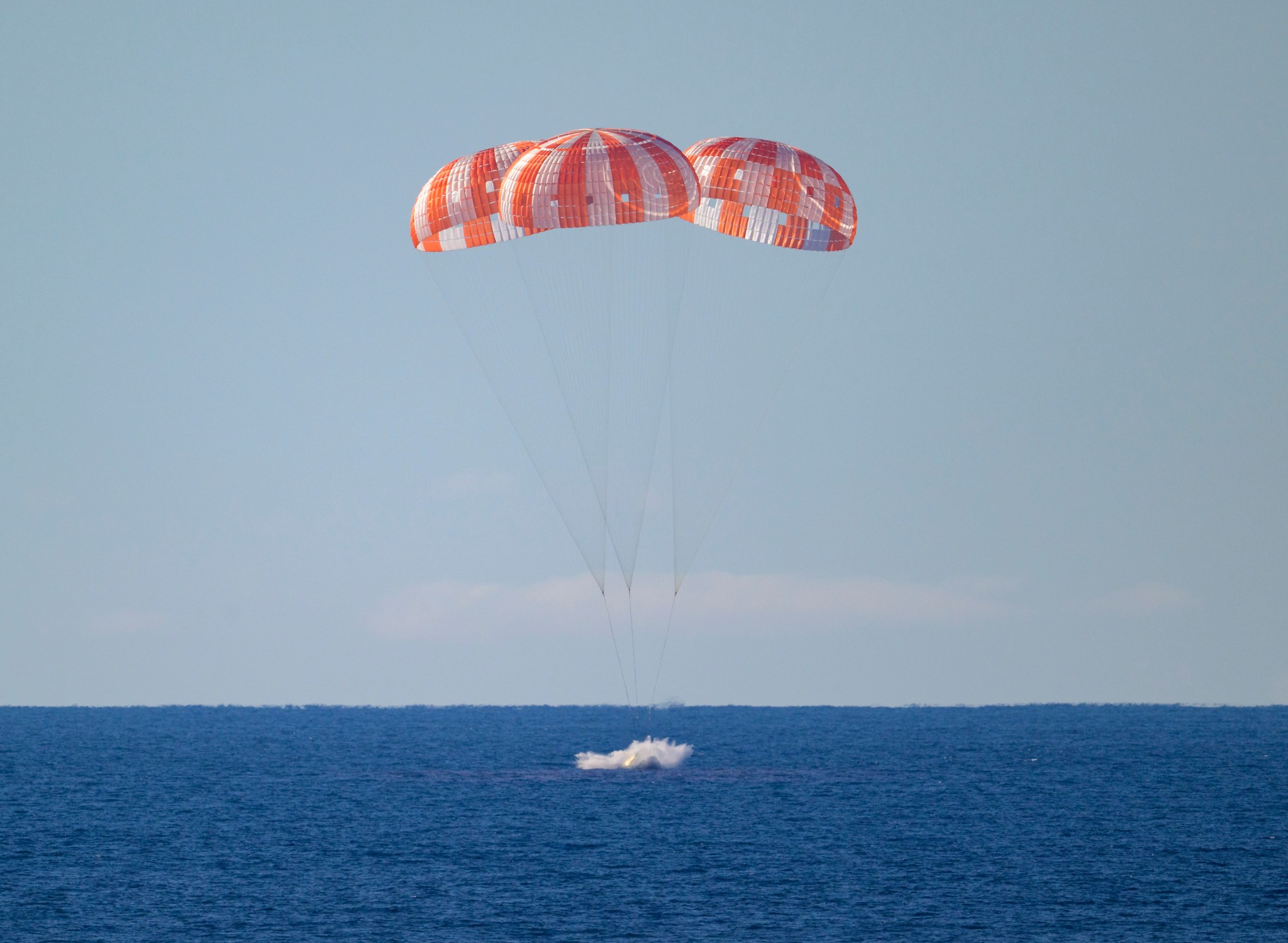
That's how Mission Control in Houston described Orion's splashdown. The capsule touched the water right on target in the Pacific Ocean, about 60 miles off the coast of San Diego.
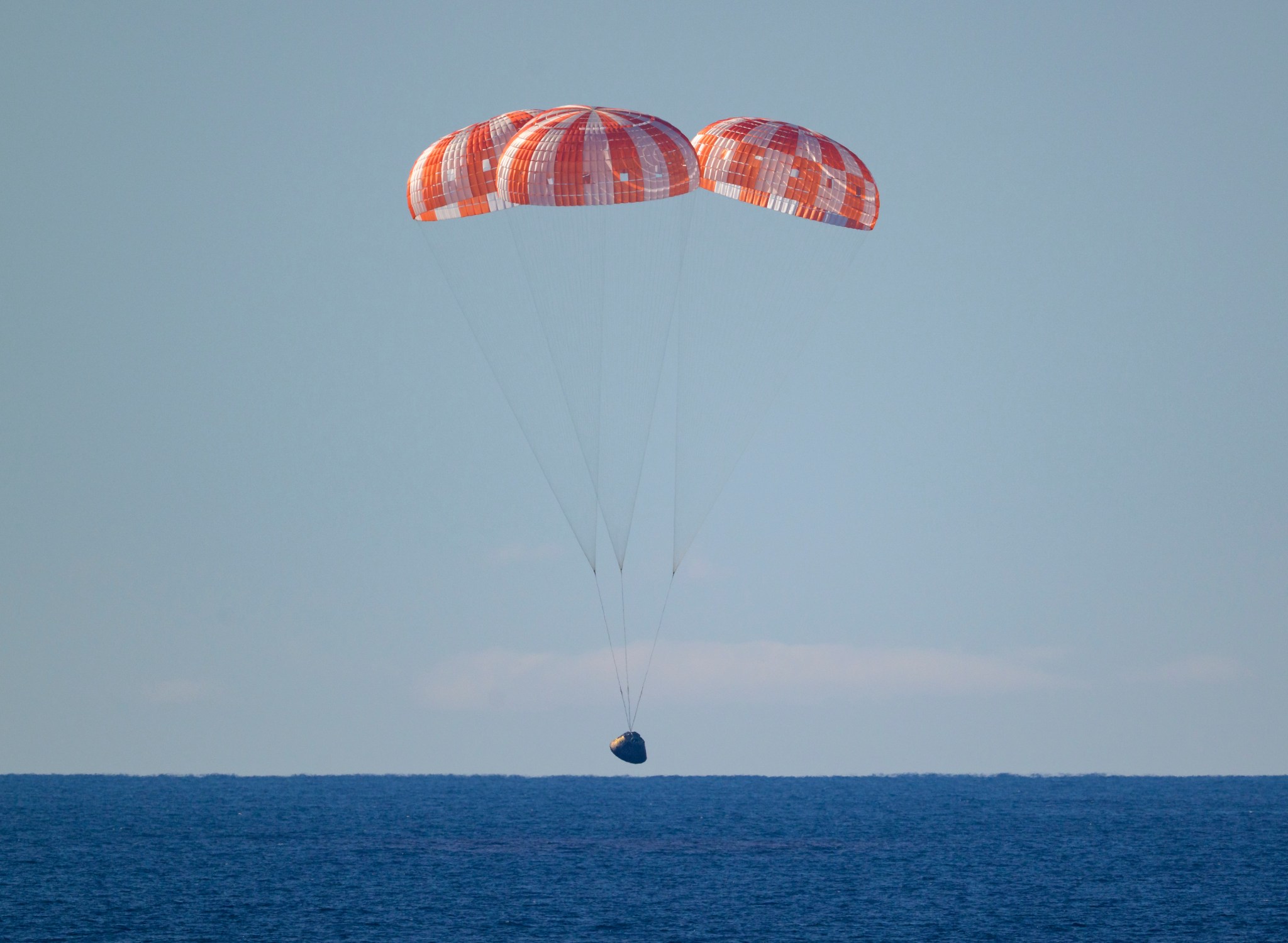
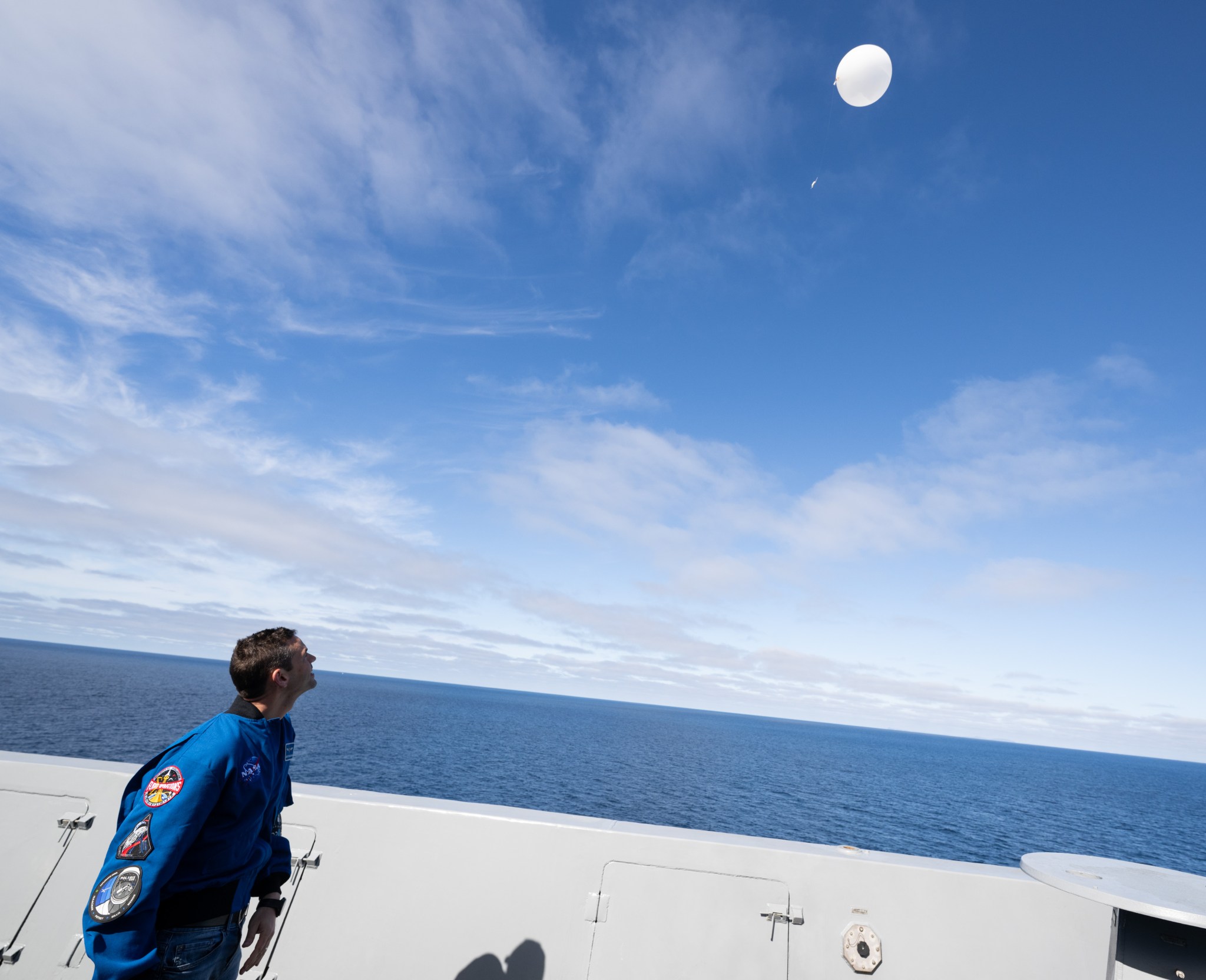
Commander Reid Wiseman radioed in right after splashdown: "All four of us are doing well." Within two hours, the crew was extracted by helicopter to the US Navy amphibious transport dock USS John P. Murtha.
What happened in 10 days:
— For the first time in 54 years, humans flew to the Moon and returned.
— Broke Apollo 13's record for farthest distance from Earth: 407,000 km.
— First-ever photos of Earth from the far side of the Moon taken by a crewed spacecraft (Earthset).
— Observed the first-ever total solar eclipse seen from beyond Earth.
— The heat shield survived 2,760 °C on reentry. The Artemis I issues did not recur.
— A jar of Nutella became a meme.
Next mission — Artemis III. This time, with a landing.
They
did it
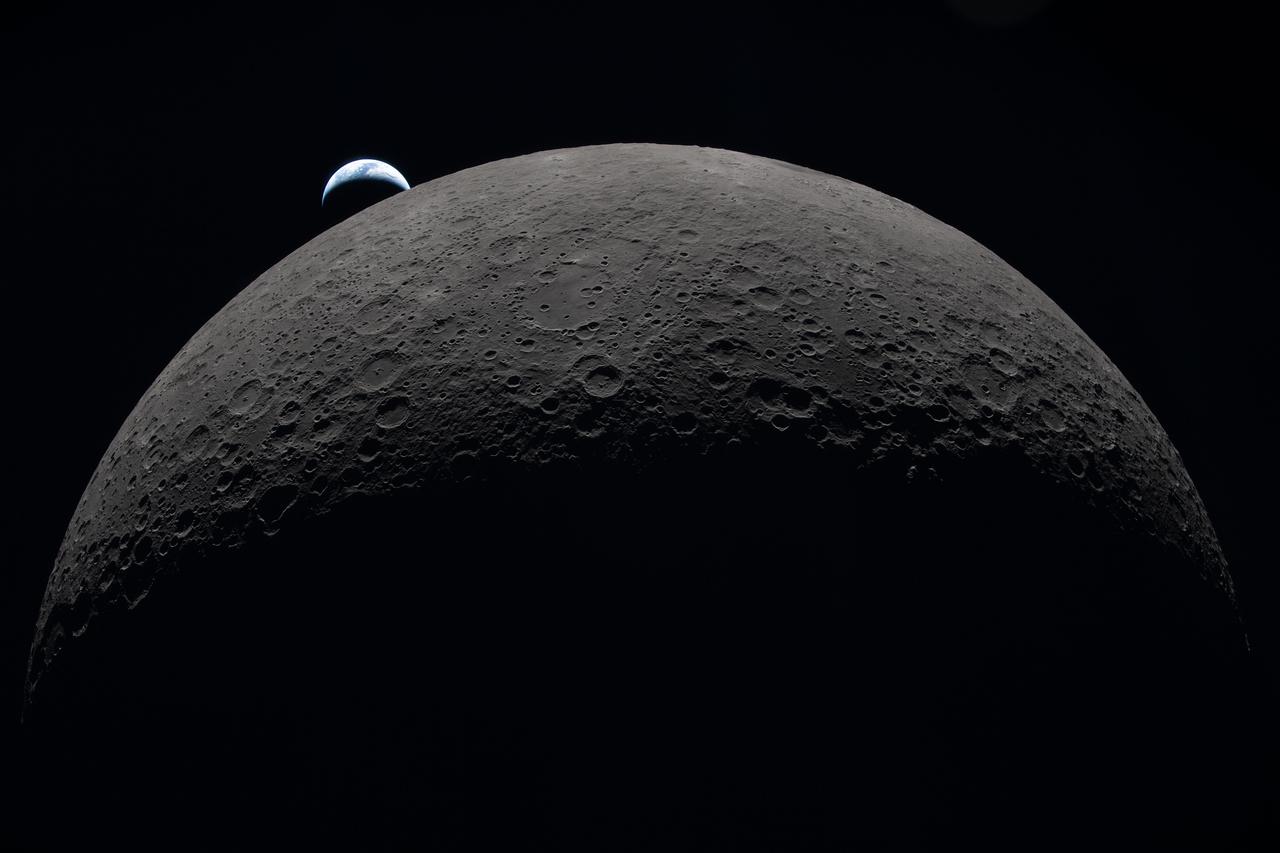
On April 6, 2026, the Orion crew flew around the far side of the Moon — just 128 km above the surface. Earth disappeared below the lunar horizon. Communication was lost for 47 minutes.
And then this shot appeared:
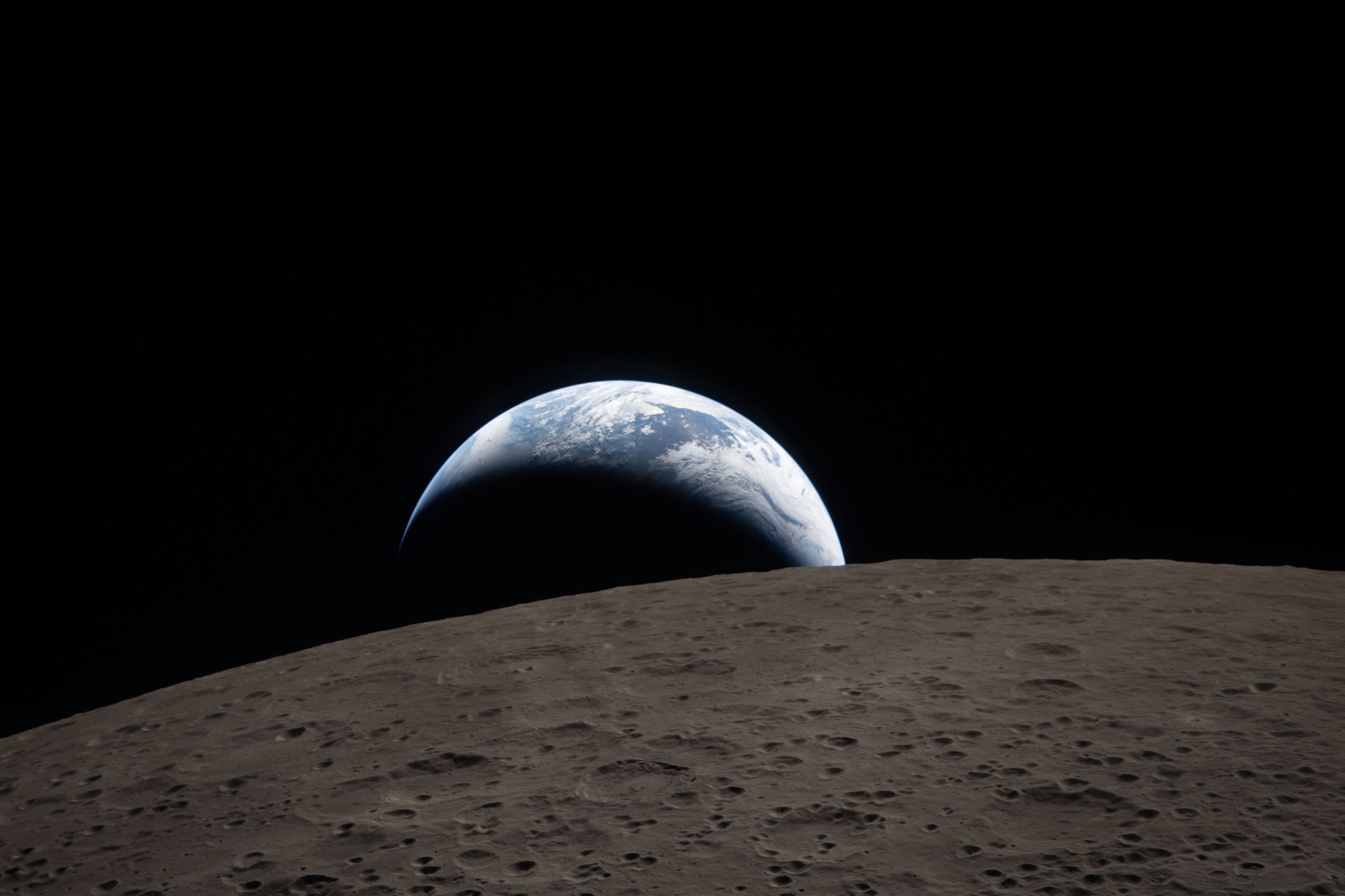
The White House captioned the photo: "Humanity from the other side. First photo from the far side of the Moon taken from a crewed spacecraft."
407,000 km new record distance from EarthThe crew beat Apollo 13's 1970 record by 6,616 km. Four humans have now been farther from home than anyone in history.
Also from the flyby:
— The crew witnessed the first-ever total eclipse beyond Earth and recorded 6 meteoroid impact flashes on the lunar surface.
— A jar of Nutella floated out of a cabinet in zero gravity during the live broadcast and became an instant meme. NASA confirmed: not a product placement — the crew just likes chocolate spread.
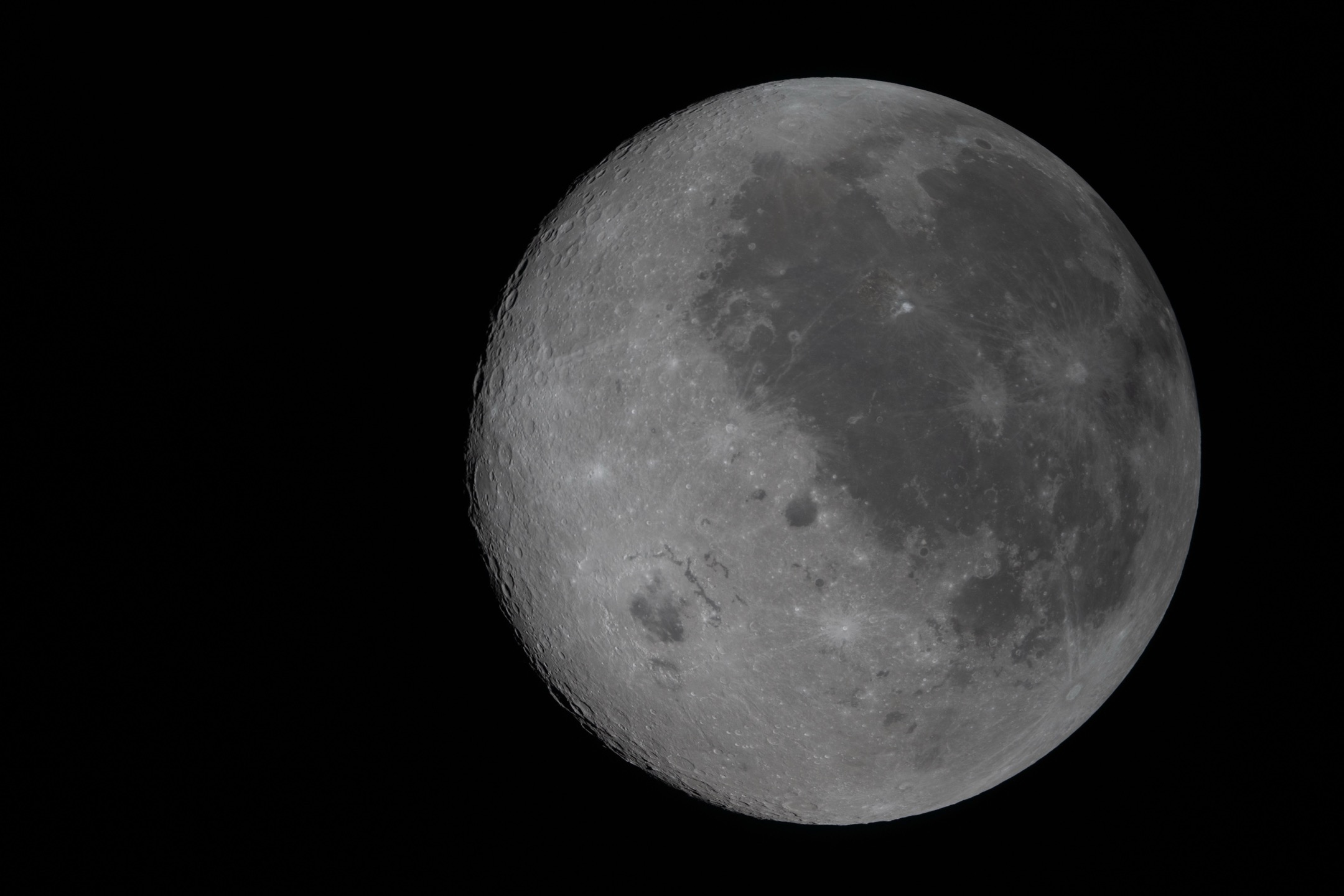
Mission
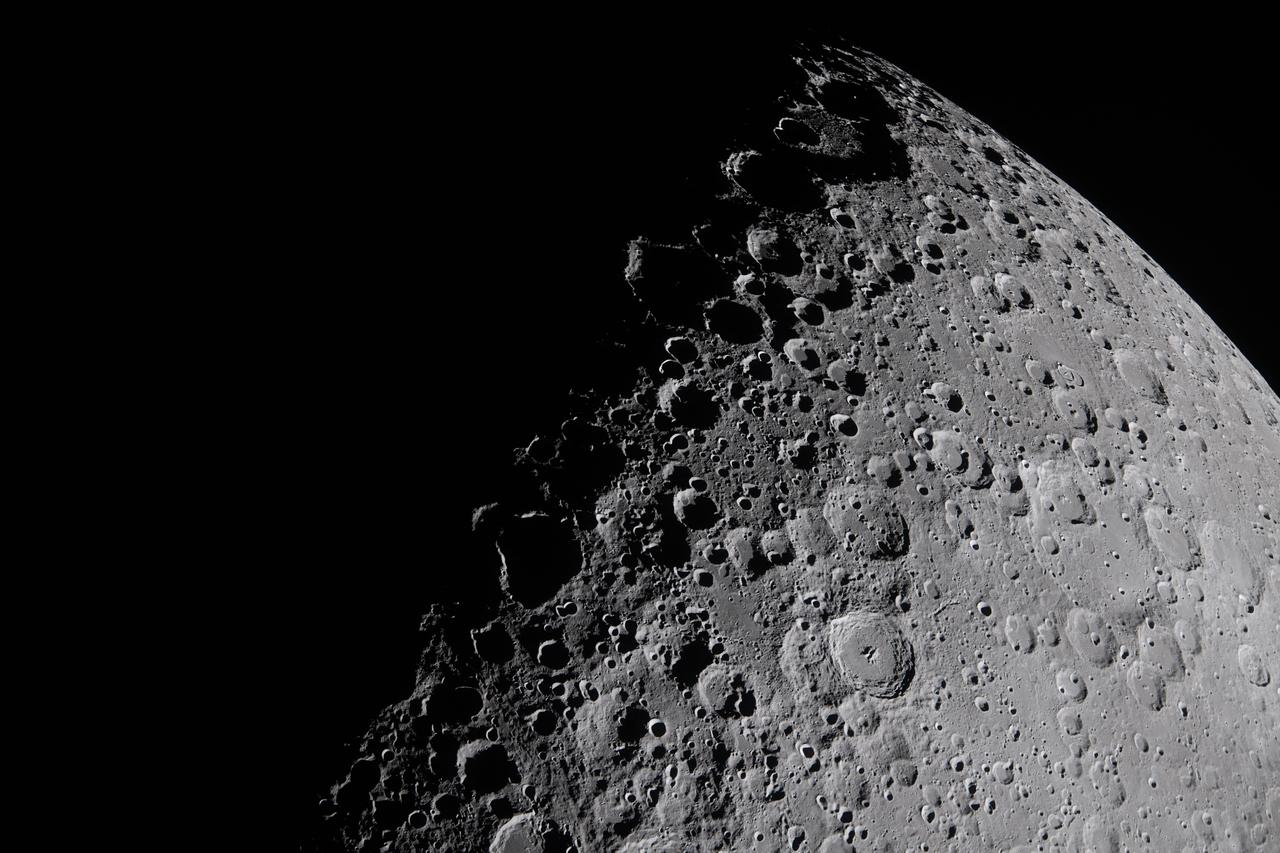
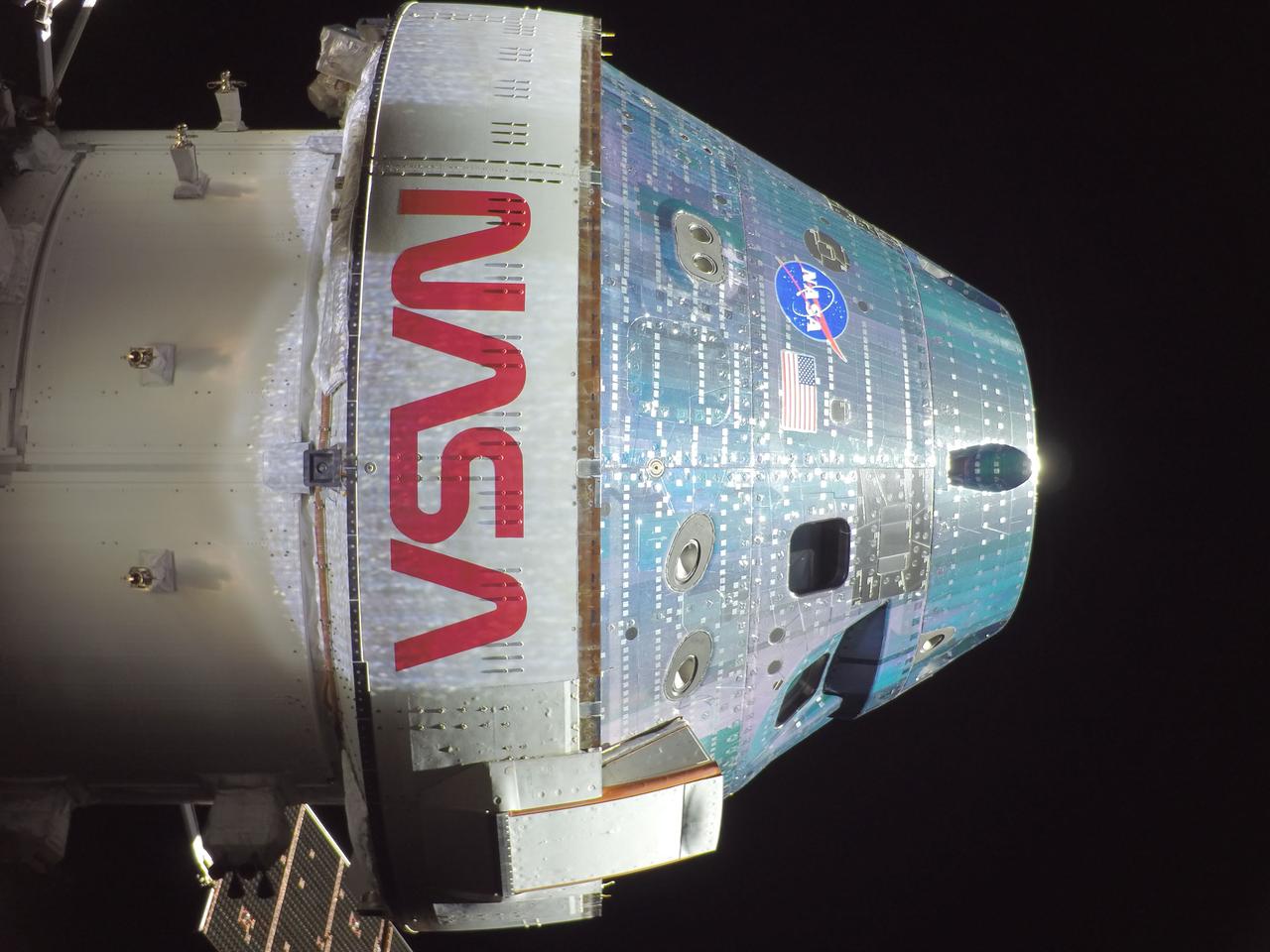
photos
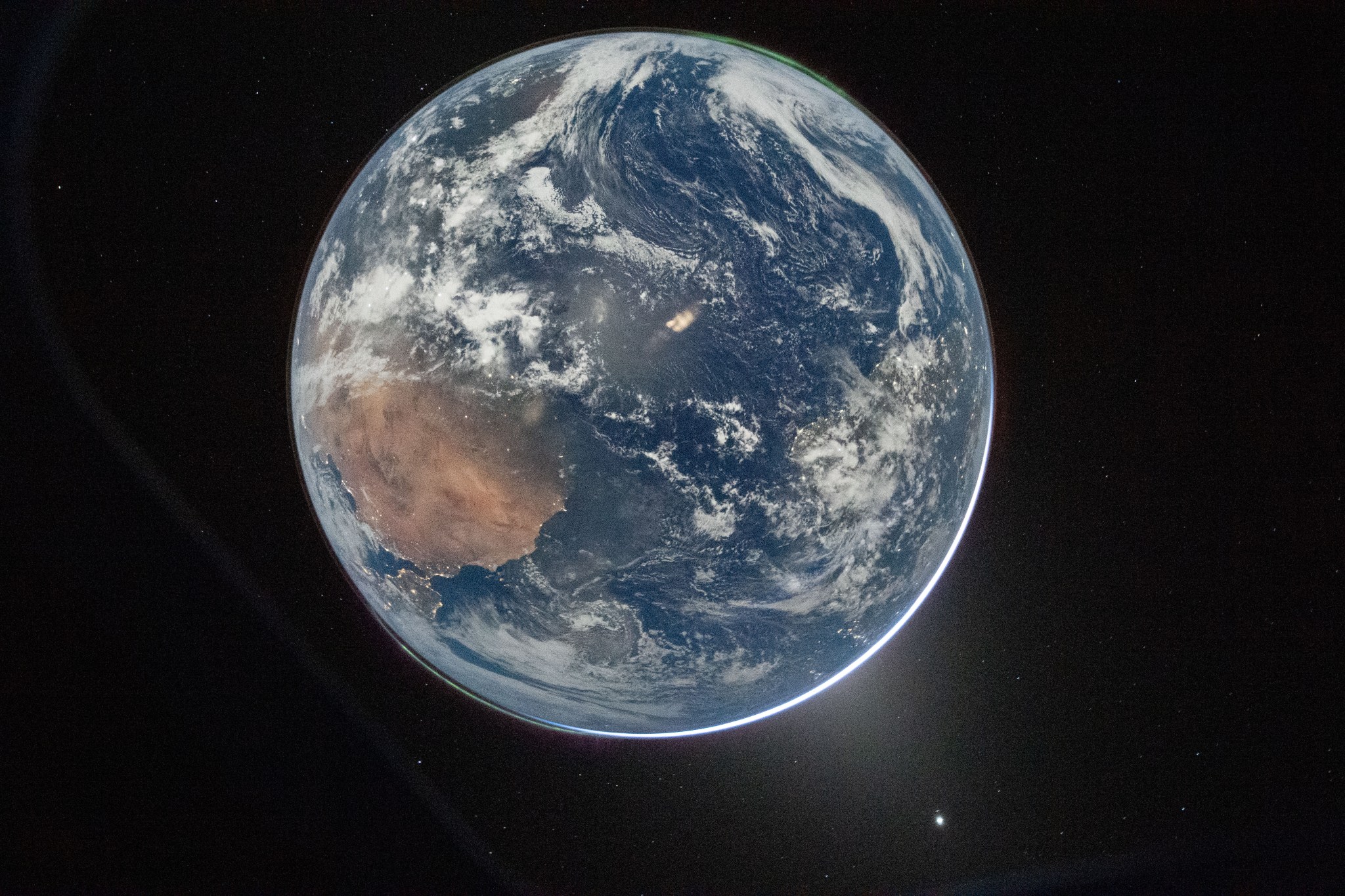
All shots taken aboard Orion. Nikon D5, 80–400 mm lens. NASA public domain.

Watch the
mission
The complete Artemis II story in video — from launch to splashdown.
Official NASA Recap · Artemis II
NASA▶ Full launch broadcast — 6+ hours of official NASA coverage from launch day
▶ Crew voices from deep space — Wiseman, Glover, Koch, and Hansen call Earth on the way to the Moon
▶ Full mission animation by NASA — CG walkthrough from launch to splashdown
▶ How laser links Orion with Earth — NASA explains the O2O laser communication system
Scale
Just let these numbers sink in:
384,400 km distance to the MoonEnough to circle Earth ten times. You could line up every planet in the Solar System within that distance.
39,400 km/h spacecraft speedTen times faster than a bullet. New York to London would take just 9 minutes.
2,760 °C heat shield temperature on reentryTwice as hot as lava. A 3-ton heat shield is the only thing standing between the crew and searing plasma.
260 Mbps laser downlink speed from spaceA first in crewed spaceflight: video, voice, and telemetry travel not on radio waves, but on a laser beam. NASA's O2O system lets the crew stream HD footage from over 100,000 km away from Earth. A beam the width of a pencil cuts through space and hits a telescope in California.
Flight
trajectory
After launch, Orion enters orbit around Earth — about 200 km altitude, 28,000 km/h. The spacecraft circles while checking out its systems.
Then the key moment: the upper stage fires its engine for 18 minutes and accelerates the spacecraft to 39,400 km/h. That's enough to break free of Earth's gravity and head for the Moon.
From there no engine is needed. The spacecraft coasts for four days, swings around the far side of the Moon — and lunar gravity alone turns it back toward Earth. This is called a «free-return trajectory»: if anything goes wrong, the spacecraft will come home anyway.
Trajectory animation. Trail colors: ● Earth orbit, ● burn, ● coast to Moon & flyby, ● return.
10 days.
10 stages.
Each one at the edge of human capability.
Liftoff
The 98-meter SLS rocket lifts off from Florida. Its thrust is greater than the legendary Saturn V that carried the Apollo missions.
Booster separation
The two side boosters burn out in 126 seconds and fall into the ocean. The rocket is already at 48 km altitude.
In orbit
The core stage is jettisoned. Orion reaches low Earth orbit at 28,000 km/h.
Burn to the Moon
The upper stage fires for 18 minutes and accelerates the spacecraft to 39,400 km/h — enough to escape Earth's gravity and head for the Moon. The engine is no longer needed after that.
Crossing the void
The spacecraft pushes through the radiation belts and rapidly pulls away from Earth. The crew tests manual control and life support systems.
Far side of the Moon
Orion passes just 128 km above the Moon's far side — closest approach. No contact with Earth — the Moon fully blocks all signals. The crew photographs Earthset and observes a solar eclipse.
407,000 km from Earth
The Moon's gravity swings the spacecraft onto a return course. The crew sets the all-time record for human distance from Earth — 6,616 km farther than Apollo 13.
Coming home
The spacecraft coasts back to Earth. Final trajectory correction burns. The crew prepares for the most dangerous phase of the mission.
2,760 °C survived
Reentry went as planned: 23:53 UTC at 40,000 km/h. The heat shield held against the plasma. Skip-entry maneuver worked. Artemis I issues did not recur.
Three parachutes. Pacific Ocean.
Perfect bullseye splashdown — the capsule touched down right on target, 100 km off San Diego. The crew was extracted by helicopter to USS John P. Murtha within two hours. All four in good health.
Who's aboard
Four people. Each with thousands of hours of training and their own story.
Reid Wiseman
US Navy captain and experienced test pilot. Responsible for the entire crew and every critical decision aboard.
Victor Glover
Navy captain, previously piloted Crew Dragon to the ISS. First Black astronaut to fly to the Moon.
Christina Koch
Holds the record for the longest continuous spaceflight by a woman (328 days). Participated in the first all-female spacewalk.
Jeremy Hansen
Fighter pilot from the Canadian Space Agency. First non-American in history to leave low Earth orbit.
How we got
here
54 years. Half a century. Between the last flight to the Moon and this one.
The last time
Eugene Cernan — the last human on the Moon. Apollo 17 returns home. The program is shut down, funding cut.
45 years in low orbit
Shuttles, the ISS, telescopes. We built a "home" in low Earth orbit, but no humans went beyond 400 km.
Birth of Artemis
NASA officially approves a new program, named after Apollo's twin sister. The goal — a sustainable base on the Moon and a leap to Mars.
Artemis I
Orion successfully flies around the Moon uncrewed. The spacecraft survived radiation and reentry plasma. The path for humans is open.
Artemis II — ✓ complete
For the first time in half a century, four humans flew to the Moon and returned. 10 days in deep space. Apollo 13 distance record broken. Next step — Artemis III and landing.
Next —
the lunar surface
Artemis III (planned for 2026) will bring us back to the lunar surface itself, near the South Pole. But Orion won't land — it will only deliver astronauts to lunar orbit.
Waiting for them will be the massive Starship HLS lander from SpaceX. It will be on Elon Musk's vehicle that humans first touch lunar dust since 1972.
Then — construction of the Gateway lunar station. The Moon will become our permanent outpost and a proving ground for the technologies that may eventually carry humanity to Mars.
It happened. They came back — April 11, 2026. The next mission is Artemis III and the first lunar landing in 54 years.